
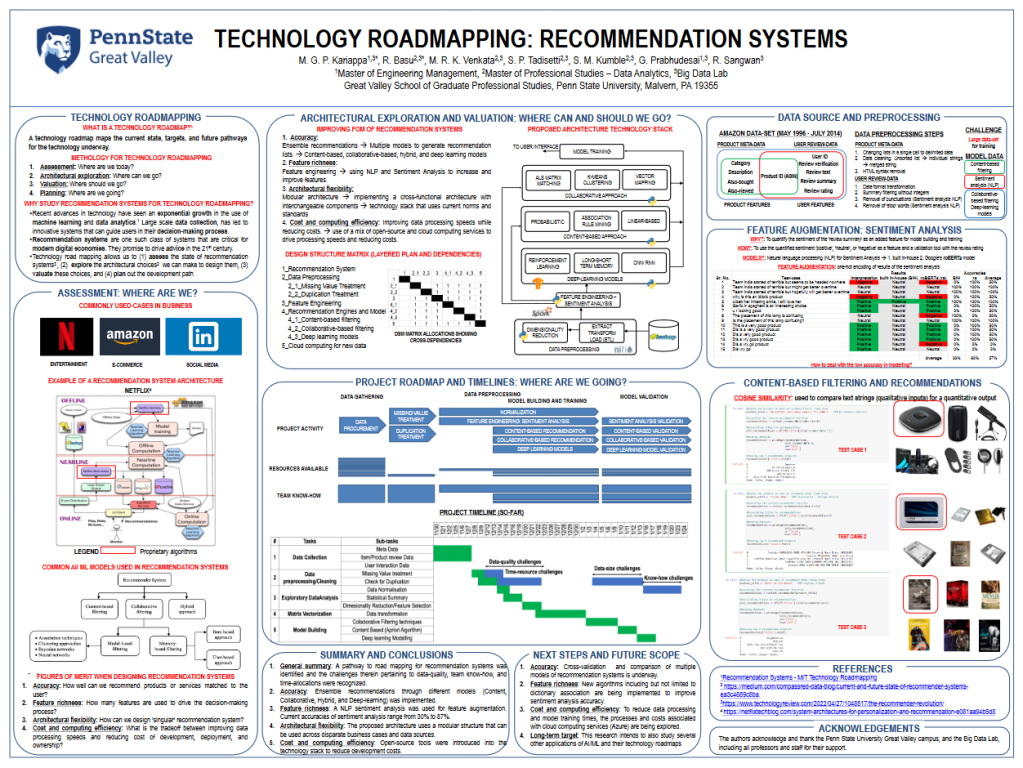
In the realm of technology, recommendation systems stand out as pivotal tools in guiding decision-making processes for users across various digital platforms. As a data scientist and graduate research assistant at Pennsylvania State University, I’ve had the profound opportunity to contribute to the advancement of these systems. This blog post will detail the intricacies of the recommendation systems I developed, focusing particularly on the machine learning and deep learning aspects.
The Essence of Recommendation Systems
Recommendation systems have become indispensable in today’s data-driven world. They analyze vast quantities of information to suggest items users might like, whether it’s the next movie to watch on Netflix or a new product to purchase on e-commerce websites. The implementation of these systems significantly enhances user experience and business outcomes
The Recommendation System Sandbox
My project at Penn State involved developing a sandbox recommendation system using deep learning models for various business cases. This sandbox served as a testbed for experimenting with different algorithms and architectures to optimize performance.
Assessing the Current Landscape
The first step in my journey was assessing the existing recommendation systems landscape. Common applications spanned entertainment, e-commerce, and social media. Understanding these systems’ complexities allowed me to identify opportunities for improvement.
Architectural Exploration: Building on a Strong Foundation
The architectural exploration phase involved dissecting the recommendation system’s structure to identify the most efficient and effective model. Ensemble methods, feature engineering, modular architectures, and cost-efficient computing strategies were at the forefront of this exploration.
Ensemble Recommendations
Combining multiple models—content-based, collaborative-based, hybrid, and deep learning models—allowed for more accurate and diverse recommendation lists.
Feature Richness Through NLP
Incorporating Natural Language Processing (NLP) and sentiment analysis, I was able to enrich the features used by the system, leading to more personalized and relevant recommendations.
Modular Architectural Flexibility
Designing a system with interchangeable components ensured that we could adapt to the ever-changing technology landscape, keeping our recommendation system agile and up-to-date.
The Technical Grit: Deep Learning Models and Their Impact
Case Study: Google Ranking Recommender Model
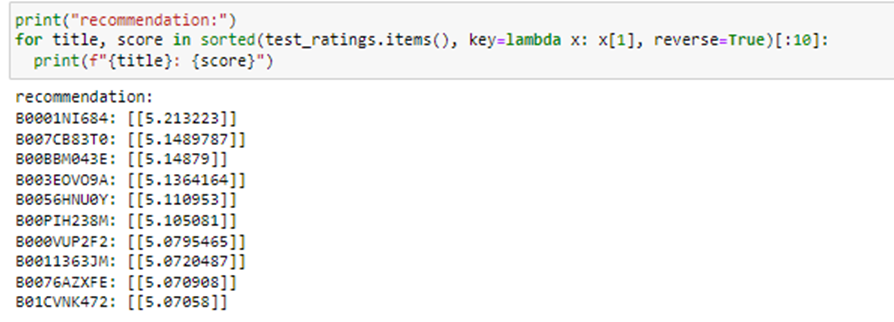
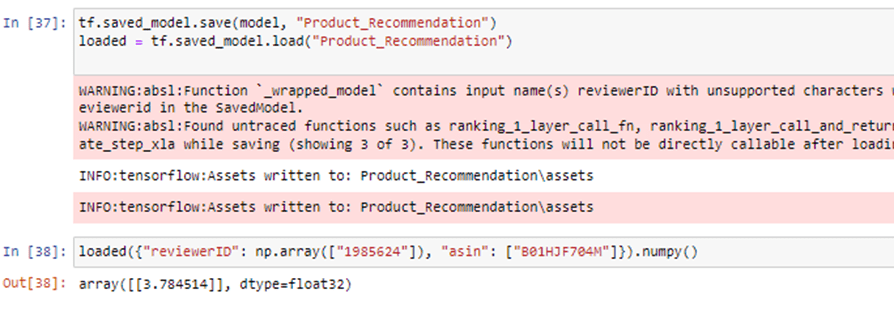
One of the key highlights of my project was the utilization of a Google ranking recommender model to further improve accuracy of the recommendations. This model leveraged the power of deep learning to accurately predict user preferences and boost our system’s effectiveness in ranking items.
Data Processing and Preprocessing
Data is the lifeblood of any ML model. Meticulous preprocessing steps like handling missing values, removing duplicates, and transforming data formats set the stage for effective model training.
Sentiment Analysis: Beyond the Rating
Deep learning models, particularly those utilizing convolutional neural, have demonstrated significant potential in enhancing the performance of recommendation systems. These models excel in handling unstructured data, like images and text, making them ideal for analyzing and predicting user preferences.
Sentiment analysis provided an additional dimension to our data, offering insights into the emotional undertones of user reviews, which, when paired with traditional ratings, significantly refined our recommendation engine.
Validation and Accuracy
Through rigorous validation processes, the model’s predictions were put to the test, ensuring accuracy and reliability before deployment.
Conclusion and Future Directions
The exploration and development of recommendation systems at Penn State University have not only fostered my growth as a data scientist but also contributed to the broader field of machine learning. Looking ahead, the goal is to refine these models further, explore new algorithms, and enhance the cost and efficiency of computing resources. This ongoing project epitomizes the dynamic and transformative power of AI and ML in crafting the future of digital recommendation systems.
 Rikin Basu
Leave a comment