
Cardiovascular diseases (CVDs) are the leading cause of mortality worldwide. As per WHO forecasts, mortality from CVDs is expected to rise significantly by 2030. This elevates the importance of early diagnosis and control of hypertension, a key risk factor for CVDs. Here, I present a transformative project from my tenure as a graduate research assistant at Penn State University, where we harnessed the capabilities of Photoplethysmography (PPG) signals and deep learning to indicate critical illness in patients.
The Challenge: Precision in Prediction
While the potential of PPG signals in monitoring cardiovascular health is immense, the challenge lies in the extraction of high-quality signals for accurate morphological analysis. Traditional methods depend on the analysis of electrocardiogram (ECG) and PPG signals, but these can be operationally complex and sensitive to noise.
Innovations in Data Collection and Preprocessing
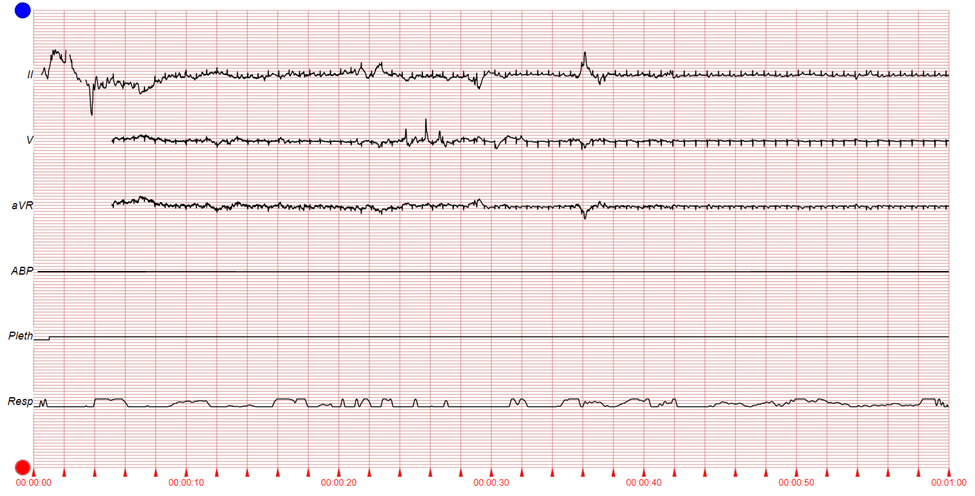
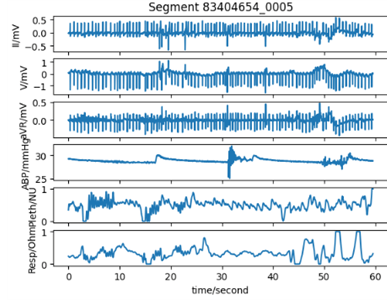
Utilizing the robust MIMIC-IV Waveform Database, we meticulously gathered waveform and numeric data directly from patients in ICU settings. With a focus on high-resolution, time-sensitive signals, we meticulously filtered and processed these signals for our deep learning models. This rigorous data preparation was foundational for the accurate classification of the PPG signals.
A Closer Look at Signal Analysis
Our research delved into differentiating PPG signals, a crucial step in pinpointing fiducial points crucial for blood pressure assessment. Employing Python’s SciPy functions, we analyzed the shape and derivatives of PPG signals to identify these points accurately.

Methodology: Deep Learning as a Game-Changer
We adopted a three-pronged approach, leveraging a self-tuned Deep Neural Network (DNN), Keras tuner for hyperparameter optimization, and a Random Forest classifier. While DNNs are sophisticated, they may not always be ideal for datasets with a smaller number of records, which led us to explore the robustness of the Random Forest classifier as well.
From Theory to Application
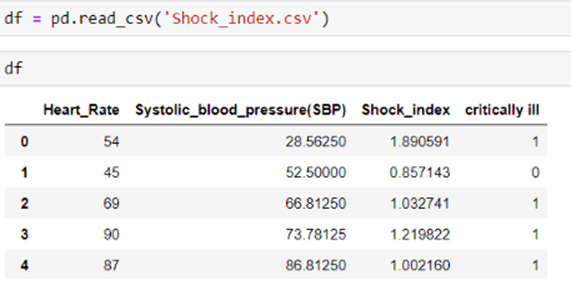
Our methodology encompassed constructing a model to predict the shock index—a measure of heart rate to systolic blood pressure ratio—indicative of a critically ill patient. This shock index, pivotal in medical assessments, was used as a benchmark to evaluate our models.
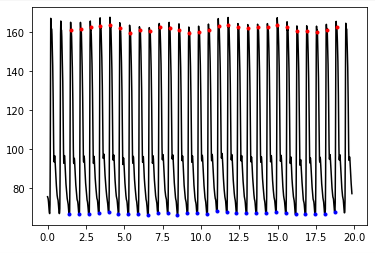
Blood Pressure extraction in ppg signals for a 20 second segment
Results: A Benchmark for Future Innovations
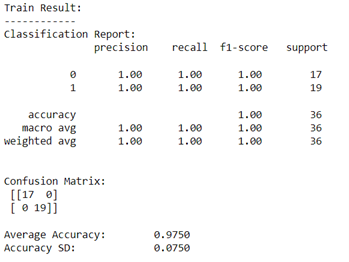
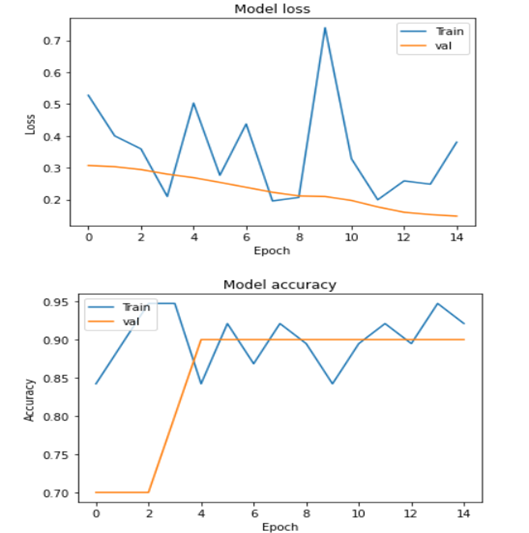
Our findings were illuminating. While the DNN models showed promise, they tended to overfit our data. The Random Forest classifier emerged as the most effective, balancing accuracy with computational efficiency—perfect for real-time, portable monitoring devices like smartwatches.
Conclusion: Advancing Medical Technology
This project stands as a testament to the fusion of medical insights and deep learning technology. As we navigate towards a future where real-time health monitoring becomes seamlessly integrated into our daily lives, the methodologies and findings from this research are pivotal steps forward in the realm of medical technology and patient care.
Looking Forward
In the realm of deep learning and health technology, this project is just the beginning. With more data and computational power, the potential for DNNs to revolutionize patient care is immense. It opens the door to portable, real-time monitoring systems that could redefine the landscape of healthcare.
 Rikin Basu
Leave a comment